
Working with Change Requests
How subsequently added change requests are billed with Leadtime
Even if a project offer has already been approved by the customer, requirements can often still change in reality - for various reasons:
- A desired feature is more complex than originally assumed.
- At launch, one requirement was not yet fully clarified.
- The customer requests additional services during implementation.
The central question is then: Who bears the costs for the additional work?
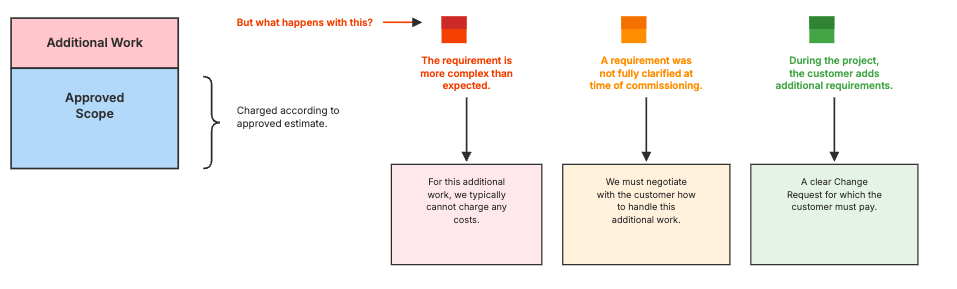
In project management, the customer’s subsequent requirements are referred to as one Change request. Whether a new work package is a change request or was included in the original scope often has to be negotiated on a case-by-case basis.
About the area: Billing
This is how Leadtime supports the handling of change requests
To ensure that additional work can be billed transparently and correctly, Leadtime offers several functions:
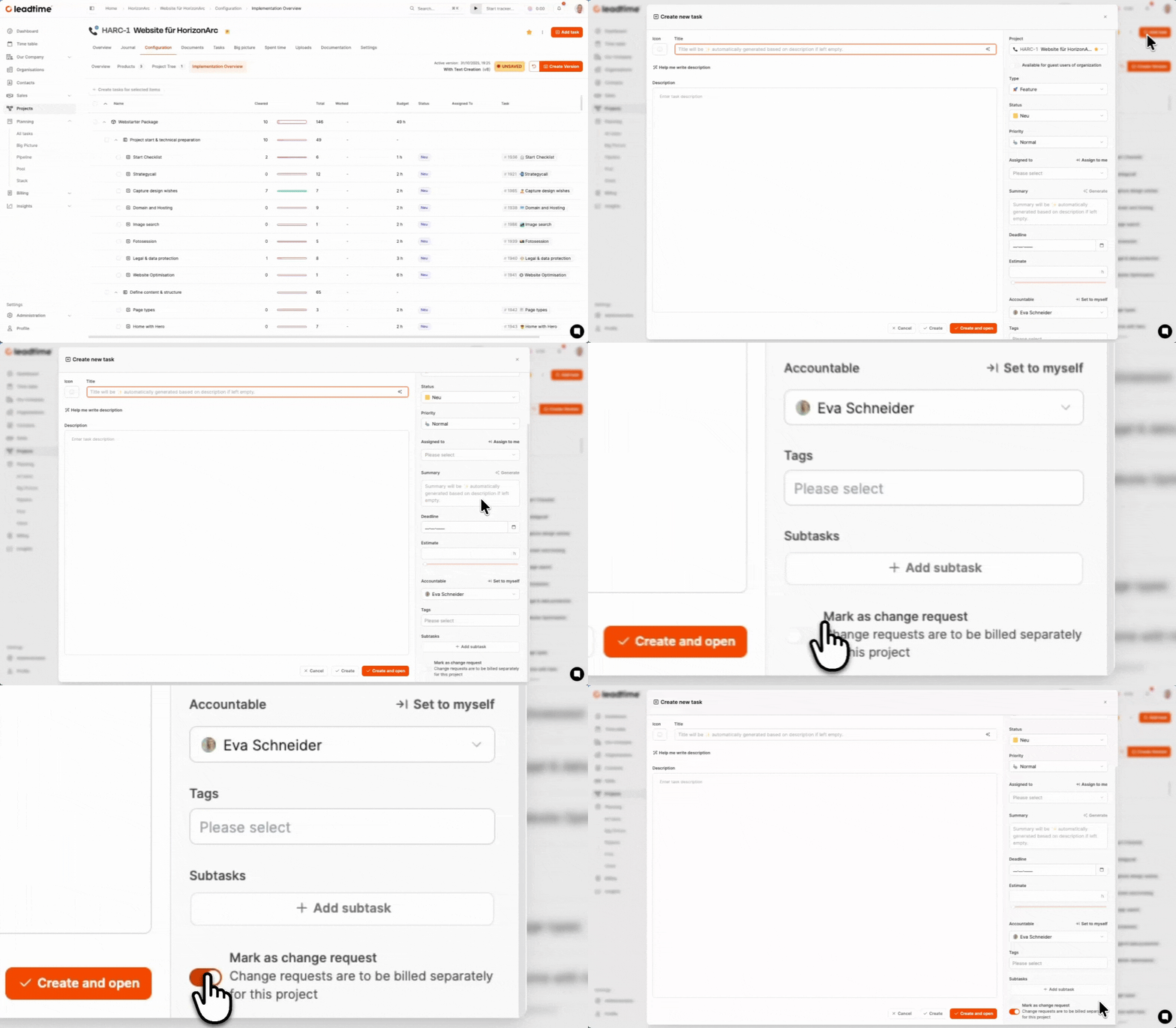
In tickets that are not related to my work package, there is a checkbox in the right column “Is a change request”. Everyone appears at the billing stage Change requests as separate invoice items – in addition to the original master version of the project.
Tickets without an assigned work package
If an additional ticket is created during the course of the project that is not assigned to an existing work package, it automatically ends up in the node “Unassigned tasks” below the regular project tree.
When billing, all tickets that are not assigned to a work package and are not marked as a change request are ignored. Due to a planning error, this is additional work that is not covered by the original offer and which the service provider has to bear himself.
Create larger change requests as a separate project
Another approach to dealing with larger change requests is to do so separate project in Leadtime to create and the change request as one regular customer project to treat. This gives the change request its own project tree, a clean effort estimate and a dedicated offer. It is then planned, versioned, documented and implemented as usual. This means that the main project and additional expenses remain clearly separated, transparent and can be billed cleanly.
Projects create